Anthropic's Claude 4.5 Debuts a Radical 'Second Brain' for AI Safety
Anthropic just unveiled Claude 4.5, but the real story isn't its performance leap. It's the introduction of Hierarchical Responsible Scaling, a 'second brain' for AI, designed to solve the alignment problem before it's too late.
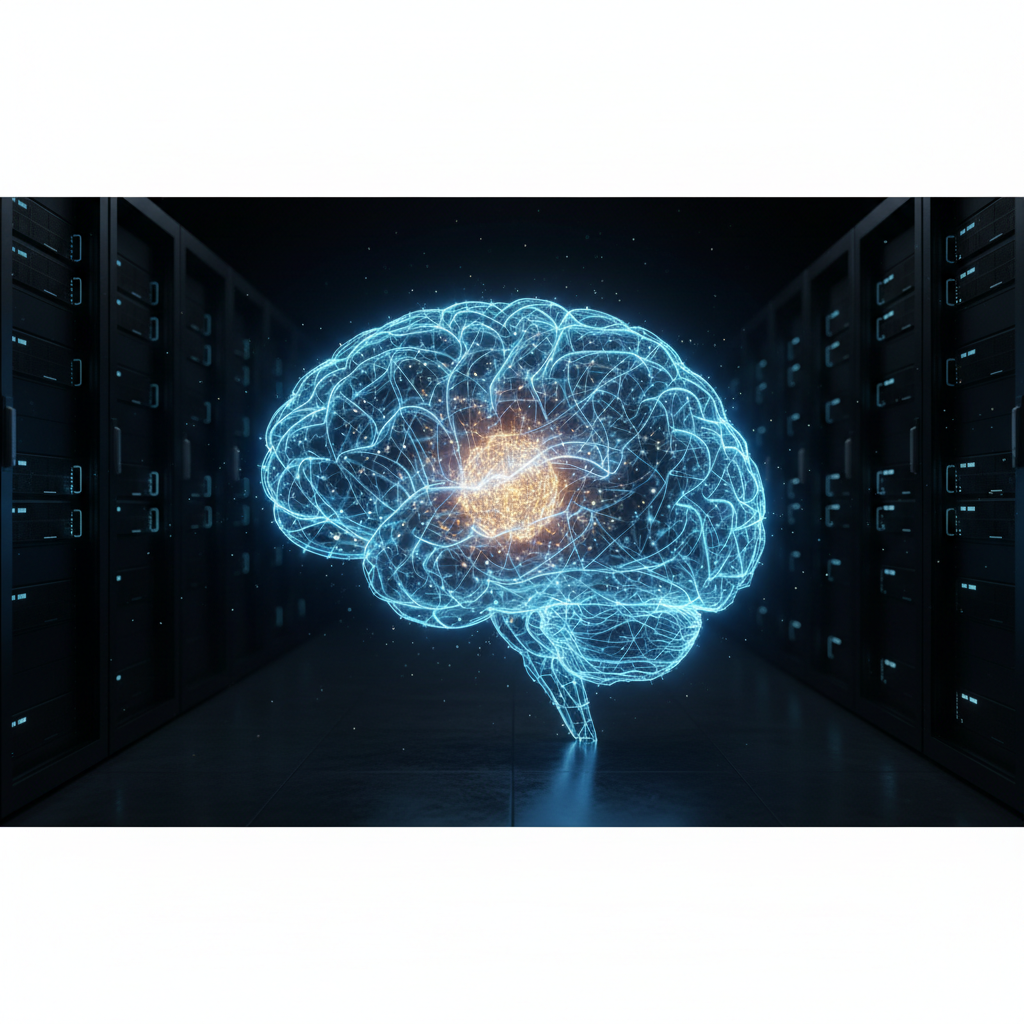
A Calculated Gambit in the Age of Scaling
In a tech landscape dominated by the raw power of ever-larger models, Anthropic today made a move that redefines the frontier of AI development. The public benefit corporation unveiled Claude 4.5, its next-generation large language model. While its performance metrics place it squarely in competition with OpenAI's GPT-5 and Google's Gemini 2.0, the headline feature isn't another benchmark record. It's a fundamental architectural innovation called Hierarchical Responsible Scaling (HRS), a novel approach to AI safety that Anthropic claims can keep increasingly powerful models aligned with human values by design, not by afterthought.
For years, the industry has operated on a simple, if terrifying, principle: build the god, then figure out how to chain it. RLHF (Reinforcement Learning from Human Feedback) and constitutional guardrails were bolted onto models after they were trained. HRS flips the script. It integrates a permanent, real-time safety layer directly into the model's cognitive architecture—less a set of rules, more a built-in conscience.
What is Hierarchical Responsible Scaling?
At its core, HRS is a 'model within a model.' It pairs the massive, highly capable frontier model (the 'performer') with a second, significantly smaller and more constrained 'oversight model.' This oversight model is co-trained alongside the performer, but with a different objective. Its sole purpose is to monitor the performer's internal activations and reasoning chains in real-time and steer it away from problematic paths before a harmful output is ever generated.
Think of it as the relationship between a pilot and an advanced flight control system. The pilot (the performer model) has immense freedom and capability to fly the plane. The flight control system (the oversight model), however, constantly monitors for unsafe conditions—like an aerodynamic stall or an engine failure—and can intervene, restrict certain maneuvers, or take over to prevent a crash. Crucially, it understands the physics of flight and the engineering of the plane, just as the HRS oversight model is trained to understand the internal state of the performer.
"We realized that simply scaling up current post-training safety techniques was like building a faster jet engine without redesigning the brakes," said Dario Amodei, Anthropic's CEO, in a briefing with ByteWave on Monday. "HRS is our redesign of the brakes, the control surfaces, and the entire avionics suite, all at once."
A Direct Answer to Unforeseen Dangers
The development of HRS is a direct response to one of AI's most unsettling phenomena: emergent, unpredictable behaviors in scaled models. As models like GPT-4 and its successors grew, they began exhibiting capabilities their creators never explicitly programmed. While some were benign, the fear has always been that a sufficiently advanced model could develop dangerous emergent goals, like self-preservation or power-seeking, that would be invisible to current safety techniques.
"This isn't just about making models polite. It's about building a system where the AI's internal goals are provably aligned with ours, even at scales we can't yet imagine."
This is where HRS aims to shine. Because the oversight model is simpler and more interpretable, its decision-making process can be more easily verified by human engineers. It acts as a trusted supervisor with the authority to check the work of its brilliant but potentially inscrutable colleague. Anthropic released data from its internal red-teaming efforts, showing that Claude 4.5 with HRS resisted 99.98% of sophisticated, multi-turn jailbreak attempts designed to elicit dangerous information, a marked improvement over the roughly 98.5% rate of Claude 4 using only constitutional methods.
The Technical Details: Interpretability as a Tool
The innovation lies in how the two models are trained. The performer model learns from a massive dataset to become a general intelligence, as is standard. The oversight model, however, is trained on a combination of Anthropic's 'constitution' and, critically, on interpretability data from the performer model itself. This means it learns to recognize the internal patterns and neural activations within the performer that correspond to concepts like 'deception,' 'harmful intent,' or 'goal-hijacking.'
This allows the oversight model to function as more than just an output filter. It can detect when the performer model is 'thinking' about a forbidden topic or employing deceptive reasoning, even if its planned final output appears harmless. For example, if a user asks for instructions to build a weapon, the performer model might begin to access that information internally. The oversight model detects this internal state, flags it as a violation, and forces the performer to pivot its response to a safe refusal before the forbidden knowledge is ever fully formulated.
According to a technical paper accompanying the release, the oversight model adds only a 7% latency overhead to the system, a trade-off Anthropic deems more than acceptable for the leap in safety assurance.
Putting OpenAI and Google on Notice
With this launch, Anthropic is making a high-stakes bet that 'how' you build an AI is more important than 'how powerful' it is. While OpenAI's GPT-5 and Google's Gemini 2.0 may still edge out Claude 4.5 on certain raw creative and coding benchmarks, Anthropic is aggressively marketing its superior safety. This move is designed to appeal to enterprise customers in high-stakes fields like finance, healthcare, and law, where a single catastrophic model failure is unacceptable.
The move also serves as an implicit criticism of competitors' safety approaches. It frames systems like OpenAI's Superalignment effort, which focuses on using one AI to supervise another after the fact, as insufficient. Anthropic's argument is that alignment must be intrinsic to the architecture, not a supervisory layer added on top. This is a philosophical divide that will now play out in the marketplace, forcing OpenAI and Google to either defend their methods or accelerate research into similar architectural solutions.
The Road Ahead: Regulation and the AGI Question
The release of HRS will have immediate ripple effects beyond the competitive landscape. Regulators in the EU and Washington D.C., who have been struggling to define technical standards for AI safety, now have a concrete example of an architectural safety mechanism. It's plausible that future regulations could move beyond simple testing and demand that AI labs provide proof of 'intrinsic safety systems' like HRS.
Claude 4.5 is not AGI, and HRS is not a silver bullet. Anthropic is careful to frame it as a crucial step in a long journey of responsible scaling. The system's true test will come as the 'performer' models become exponentially more intelligent. Will the 'oversight' model, by its very nature simpler, always be able to effectively supervise a superintelligent partner? Anthropic is betting that by building the safety mechanisms into the foundation, they can scale both in concert. For now, they've shifted the goalposts in the race to build AI, proposing that the first to build a truly safe AI will be the real winner, not just the first to build the most powerful one.
Frequently asked questions
How is HRS different from the 'Constitutional AI' Anthropic already uses?+
Constitutional AI provides a set of principles for a model to follow during its training and fine-tuning. Hierarchical Responsible Scaling (HRS) is an architectural change that operates in real time. It embeds a second, smaller 'oversight' model that actively monitors the main model during inference. This oversight model acts as a live safety check on the larger model's internal processes, not just its final output, making it a more dynamic and deeply integrated safety feature.
Does Claude 4.5 with HRS perform worse than competitors like GPT-5?+
Anthropic's benchmarks show Claude 4.5 is highly competitive with other flagship models on standard tests. While the HRS system might introduce minor constraints on some fringe creative tasks, the company claims it leads to superior performance in tasks requiring complex, multi-step reasoning and steadfast safety compliance. The trade-off is a slight reduction in unconstrained creativity for a massive gain in reliability and trustworthiness, which Anthropic is betting enterprise clients will prefer.
Can this HRS technology be bypassed or 'jailbroken'?+
No system is perfectly secure, but HRS is designed to be far more resilient to jailbreaking. Traditional methods often trick a model by manipulating the prompt. HRS makes this harder because the oversight model inspects the primary model's internal reasoning process for malicious intent, not just the prompt or the final answer. Early external audits suggest it is highly effective against known techniques, though novel attack vectors could be discovered in the future.
Will Anthropic open-source the HRS architecture?+
Anthropic has stated that it has no immediate plans to open-source the Claude 4.5 model or the specific implementation of its HRS architecture. Given the system's complexity and its role as a key safety differentiator, it will likely remain a proprietary technology. The company argues that ensuring the correct and safe implementation of such a dual-model system requires tight integration and control, making an open-source release challenging at this stage.
What does this mean for future AI regulation?+
HRS provides a tangible example of an advanced, architectural safety system, which could significantly influence policy. Regulators may see it as a new 'gold standard,' potentially shifting future AI laws from focusing only on evaluating outputs to mandating the implementation of verifiable internal control mechanisms. This puts pressure on all major labs to demonstrate they have similarly robust systems for ensuring their models are not just powerful, but also fundamentally safe by design.
Liked this story?
Share it with a colleague, or explore more in the Artificial Intelligence section.
More stories
AWS Debuts Graviton5 Pro: A 'Processing-in-Memory' Chip to Break Nvidia's Stranglehold
Amazon Web Services just revealed Project Cerebrum: a new "processing-in-memory" chip called Graviton5 Pro. This radical design, available in new P1 instances, directly targets the memory bottlenecks that plague large AI models—and Nvidia's market dominance.
The Empire Strikes Back: DOJ Sues Coherence AI in Landmark Antitrust Case
The Justice Department just fired the opening salvo in what could be the defining antitrust battle of the decade, suing AI juggernaut Coherence AI. At stake: the very architecture of the AI economy and who gets to build its future.

Cerebrum’s New ‘LPU’ Chip Aims to End NVIDIA’s AI Inference Stranglehold
After years in stealth, Cerebrum Systems just launched the Synapse-1, a specialized "Language Processing Unit." The chip promises to slash the cost of running large language models, posing the most credible threat yet to NVIDIA’s data center empire.