Anthropic's Claude 5 Rewrites AI Memory With 'Cognitive State Persistence'
Anthropic's newly unveiled Claude 5 isn't just a larger model. Its 'Cognitive State Persistence' architecture grants it long-term memory, a breakthrough that could transform AI from a stateless tool into a continuous, personalized companion.
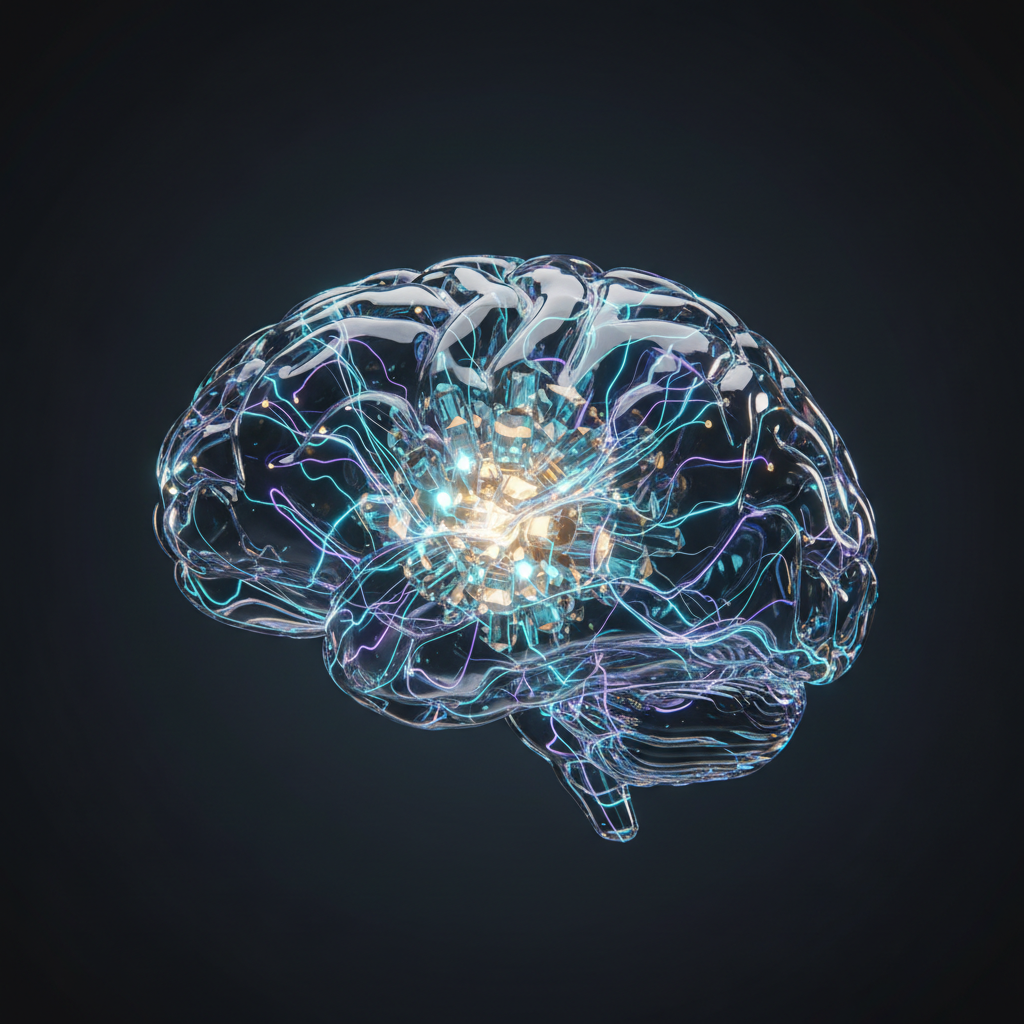
The End of AI Amnesia
For years, interacting with large language models has felt like a conversation with an extraordinarily intelligent amnesiac. Each session, and sometimes each query, starts from a blank slate, the model's brilliance constrained by the finite length of its 'context window.' Today, that paradigm has been shattered. At the AI Frontiers conference in San Francisco, Anthropic CEO Dario Amodei unveiled Claude 5, the company's next-generation model, powered by a radical new architecture named 'Cognitive State Persistence' (CSP). This technology allows the model to build and maintain a persistent, long-term memory of its interactions with a specific user, effectively remembering conversations and learned preferences not just for hours, but for weeks on end.
“We’ve been scaling context windows, pushing them from thousands to millions of tokens, but it’s a brute-force approach,” Amodei stated on stage to a packed auditorium. “CSP is a paradigm shift. It’s not about remembering more of the immediate past; it’s about understanding and internalizing the entire history of a relationship. We're moving from stateless transactions to stateful companionship.” This announcement immediately reframes the competitive landscape, shifting the goalposts from pure conversational length to the quality and depth of long-term continuity.
How Cognitive State Persistence Works
While Anthropic is holding the precise technical details of the underlying model close to its chest, our sources familiar with the research describe CSP as a two-part system that operates alongside the main transformer architecture. It decouples short-term, in-session context from long-term, persistent memory. When a user interacts with a CSP-enabled Claude 5 instance, the conversation is processed as usual within a standard context window for immediate relevance. However, at the end of a session, a secondary process analyzes the interaction, extracts key entities, facts, user preferences, and conceptual takeaways, and integrates them into a compressed, encrypted 'State Graph' unique to that user.
This State Graph isn't just a simple database of past conversations. It's a dynamically structured network of information. Think of it like a human's memory consolidation during sleep. The system identifies redundancies, reinforces frequently accessed information, and prunes trivial data. When a new conversation begins, Claude 5 loads this compact State Graph, giving it a rich, pre-loaded understanding of the user's history, goals, and even their style of communication. This is a fundamental departure from simply feeding a massive text file of past chats into a context window, which is computationally expensive and inefficient.
This is the moment AI stops being a clever parrot and starts becoming a personal historian, a collaborator who genuinely knows you and your work.
Beyond the Context Window War
The announcement is a strategic masterstroke, sidestepping the brute-force 'Context Window War' that has dominated the LLM space for the last 18 months. While competitors like Google, with its Gemini 2.5 Pro boasting a 10 million token context window, have focused on ingesting entire codebases or novels in a single prompt, Anthropic is making the case for a more elegant, efficient, and ultimately more useful solution. A 10 million token window may be able to read a book, but CSP aims to remember the *lessons* from every book you've ever discussed with it.
The implications are profound. For developers, this could mean an AI pair programmer that not only understands the current file but remembers the entire architectural history of a project and your coding habits. For a student, it means a tutor that tracks your progress over a semester, remembers which concepts you struggle with, and tailors new explanations accordingly. For everyday users, it promises a digital assistant that doesn't need to be reminded who your spouse is or what your long-term project goals are. The focus shifts from single-shot tasks to continuous, evolving collaboration.
The Competitive Landscape and Safety Concerns
The pressure is now squarely on OpenAI and Google. While OpenAI's long-rumored GPT-5 is expected to bring major performance gains, it's unclear if it will include a comparable persistent memory architecture. If not, Anthropic may have just carved out a powerful and defensible niche in the market, particularly in enterprise and high-value professional use cases where continuity is paramount. We can expect to see frantic R&D efforts from competitors to replicate this functionality.
However, an AI that remembers everything is a double-edged sword. The privacy and safety implications are immense. An AI with a perfect memory of your life, thoughts, and vulnerabilities is an unprecedented security risk. Amodei directly addressed this, emphasizing that CSP was co-developed with Anthropic's 'Constitutional AI' safety framework. “User data is end-to-end encrypted, and the State Graph is stored in a secure enclave that the model itself cannot directly read, only query through strict safety-gated APIs,” he explained. “The user has full control to view, edit, or delete their persistent memory at any time.” Despite these assurances, regulators in Europe and California are almost certain to take a very close look at this technology, and the potential for misuse or data breaches will be a significant public concern.
What's Next for Developers and Users
Anthropic is rolling out Claude 5 with CSP in a phased approach. A private beta for a select group of enterprise partners, including companies like Morgan Stanley and Atlassian, begins next month. The goal is to test its performance and safety in demanding, real-world environments. A public API for developers is slated for Q4 2026, with pricing expected to be at a premium over their stateless models. A revamped public-facing version of claude.ai featuring the new capabilities is expected in early 2027.
This technology marks the beginning of a new chapter in application development. The most exciting products will not just be wrappers around an API call but deeply integrated systems that leverage this newfound persistence. Imagine project management software where the AI is a full team member, aware of every decision ever made, or therapeutic chatbots that can provide truly longitudinal support. The era of the stateless AI tool is ending. The next wave of innovation will be built on the foundation of digital memory.
Frequently asked questions
How is Cognitive State Persistence different from just a huge context window?+
A large context window holds a massive, recent block of raw text for a single session. It's powerful but inefficient and forgets everything once the session ends. Cognitive State Persistence (CSP) creates a compressed, structured summary of key information from all past sessions. This 'memory' is loaded at the start of new conversations, providing long-term continuity without the massive computational cost of re-processing your entire interaction history every single time.
What are the privacy risks of an AI that remembers everything about me?+
The primary risks are data breaches and misuse. If a hacker accessed your AI's 'State Graph,' they would have a detailed profile of your life and work. Anthropic claims to mitigate this with strong encryption, secure enclaves, and user controls that allow you to view or delete your memory. However, it concentrates a huge amount of personal data in one place, which will undoubtedly attract scrutiny from regulators and security experts.
When can I actually try Claude 5 with this persistent memory feature?+
Initially, Claude 5 with CSP will only be available in a private beta for select enterprise partners starting in July 2026. A broader developer API is planned for the fourth quarter of 2026. A publicly accessible version for individual users on the main Claude website is not expected until early 2027, after extensive safety and performance testing has been completed. There will likely be a waitlist for access.
Will using an AI with persistent memory be more expensive?+
Yes, it is expected to be more expensive. While more efficient than using a giant context window, maintaining the encrypted 'State Graph' and performing the memory consolidation process requires additional computation and secure storage. Anthropic will likely offer this as a premium tier in their API pricing, targeting professional and enterprise use cases where the value of continuity justifies the higher cost.
Does having long-term memory mean the AI is 'conscious' or 'sentient'?+
No. While it's a major step toward more human-like interaction, it does not imply consciousness or sentience. Cognitive State Persistence is a sophisticated engineering technique for data storage and retrieval. The AI is mimicking the function of memory, not experiencing it subjectively. It is still a pattern-matching system operating on data, albeit one that can now access a much richer, longer-term dataset about its user.
Liked this story?
Share it with a colleague, or explore more in the Artificial Intelligence section.
More stories
AWS Debuts Graviton5 Pro: A 'Processing-in-Memory' Chip to Break Nvidia's Stranglehold
Amazon Web Services just revealed Project Cerebrum: a new "processing-in-memory" chip called Graviton5 Pro. This radical design, available in new P1 instances, directly targets the memory bottlenecks that plague large AI models—and Nvidia's market dominance.

The Empire Strikes Back: DOJ Sues Coherence AI in Landmark Antitrust Case
The Justice Department just fired the opening salvo in what could be the defining antitrust battle of the decade, suing AI juggernaut Coherence AI. At stake: the very architecture of the AI economy and who gets to build its future.
Cerebrum’s New ‘LPU’ Chip Aims to End NVIDIA’s AI Inference Stranglehold
After years in stealth, Cerebrum Systems just launched the Synapse-1, a specialized "Language Processing Unit." The chip promises to slash the cost of running large language models, posing the most credible threat yet to NVIDIA’s data center empire.