Boston Dynamics Unleashes Atlas-C: The Humanoid Robot Is Finally For Sale
After years of viral videos, Boston Dynamics is finally shipping a commercial humanoid. The all-electric Atlas-C is now available to logistics partners, a landmark moment poised to reshape manual labor and fundamentally challenge rivals like Tesla's Optimus.
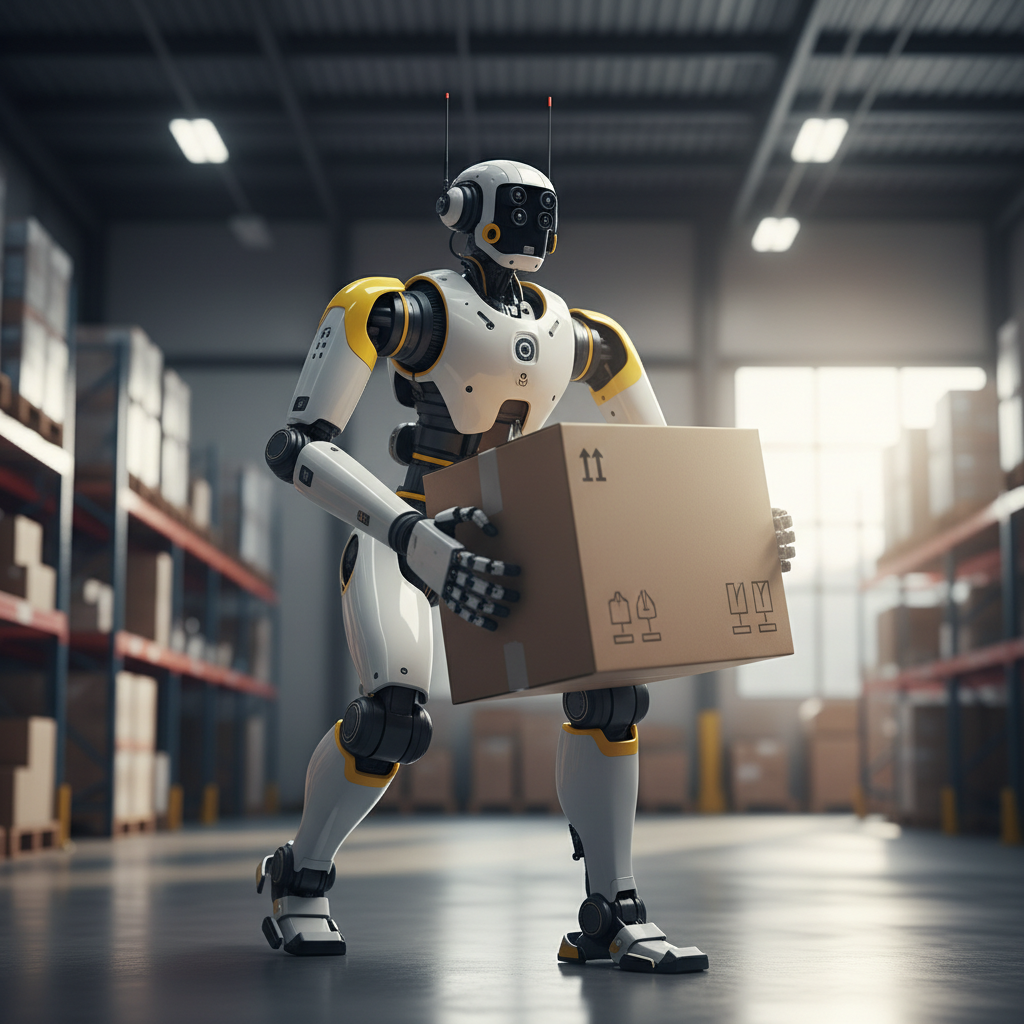
The Dawn of the Commercial Humanoid
Today in Waltham, Massachusetts, Boston Dynamics CEO Robert Playter took the stage not to debut another mesmerizing parkour routine, but to do something far more significant: he started taking orders. The company, long the darling of robotics research and viral videos, has officially launched the Atlas-C, its first commercially available, all-electric humanoid robot. The 'C' stands for Commercial, and it marks a pivotal transition from a research lab to a product company, aiming squarely at the trillion-dollar logistics and manufacturing sectors.
Initial launch partners include logistics giants DHL and Maersk, who will be deploying a pilot fleet of 100 units each over the next 18 months in select distribution centers in North America and Europe. The pricing model is as modern as the robot itself: a Robot-as-a-Service (RaaS) lease starting at $9,000 per month per unit, which includes hardware, software updates via their new 'Choreo 3.0' platform, and 24/7 support. "We didn't build Atlas to be a research project," Playter announced to a room of press and industry partners. "We built it to do real work, safely and efficiently, alongside people. This is day one of the next industrial revolution."
This is not about replacing humans, but about augmenting human potential and tackling the dull, dirty, and dangerous jobs that people don't want.
Inside the Machine: What Makes Atlas-C Tick?
The Atlas-C is a radical departure from the hydraulic prototypes that populated YouTube. Standing 1.7 meters tall and weighing 85 kilograms, its fully electric architecture is a massive engineering feat. This shift allows for quieter operation, less maintenance, and a strength-to-weight ratio that was previously unattainable. The robot can handle a payload of up to 25 kilograms—perfect for the vast majority of packages in a typical fulfillment center.
The real magic lies in its software and sensor suite. The robot is powered by 'Choreo 3.0', Boston Dynamics' proprietary whole-body control and AI learning platform. Instead of being explicitly programmed for every single motion, operators can assign high-level tasks like "unload that pallet" or "sort these totes." The AI then generates the dynamic, adaptive behaviors required to complete the job, navigating unforeseen obstacles and handling variations in package size and orientation. This is a significant step beyond the rigid automation currently seen in warehouses.
Its perception stack includes dual 4K RGB cameras for stereoscopic vision, a solid-state LiDAR system for 360-degree environmental mapping, and force-torque sensors in every joint. This allows it to perceive the world in 3D, understand object properties like weight and fragility through manipulation, and work safely in dynamic human environments. A swappable battery system, located in its torso, provides approximately 6-8 hours of continuous operation, with a hot-swap taking a trained technician under five minutes.
The Economic Equation: Robots vs. Humans
At a leasing cost of $108,000 per year, the Atlas-C is not a casual investment. But for its target customers, the math is compelling. The average fully-loaded cost of a warehouse employee in the US—including wages, benefits, insurance, and turnover costs—can exceed $70,000 per year. A single Atlas-C unit, capable of working two shifts via battery swaps, can theoretically perform the work of 1.5 to 2 human workers. This suggests a potential ROI within 12-18 months, even before factoring in gains from increased accuracy, reduced damage, and lower injury rates.
Furthermore, the high turnover rate in the logistics industry, often exceeding 100% annually, is a massive operational headache for companies like DHL. Robots don't quit. They don't get injured. They show up for every shift. This reliability and predictability is perhaps the most attractive feature for operations managers struggling to maintain a stable workforce for physically demanding, repetitive tasks.
A Crowded Battlefield for Big Tech
Boston Dynamics may have a head start in dynamic locomotion, but they are not entering an empty field. The race to build a general-purpose humanoid robot is well underway. Tesla, with its immense manufacturing prowess and AI expertise, has been aggressively promoting its Optimus robot. While early prototypes have been less agile than Atlas, Elon Musk's ability to scale production at a low cost is a factor no one can ignore. At Tesla's last AI Day, Musk targeted a sub-$20,000 purchase price for Optimus, a starkly different economic model than Boston Dynamics' RaaS approach.
Then there's Agility Robotics, whose bipedal robot, Digit, is already being piloted by Amazon. Digit is less 'humanoid' and more specialized for package handling, but its pragmatic design and focus on a single use case has given it an early foothold. Other players, from startups like Figure AI (backed by OpenAI and Microsoft) to established industrial robotics firms like ABB, are all vying for a piece of this nascent market. The key differentiator for Boston Dynamics, according to Forrester analyst Maya Singh, is its software. "Anyone can build the hardware, eventually," she commented. "But Boston Dynamics has a decade-plus lead in dynamic control software. Choreo 3.0 is their real moat."
The Uncomfortable Question of Displacement
While executives celebrate efficiency, the launch of Atlas-C brings the conversation around automation and job displacement into sharp focus. With millions employed in logistics and warehouse roles worldwide, the advent of a capable humanoid robot raises legitimate fears of mass unemployment. Boston Dynamics is proactive in its messaging, emphasizing that the robot will handle undesirable tasks and create new roles for robot technicians, fleet managers, and a new class of supervisors who manage human-robot teams.
However, labor advocates are skeptical. "'Augmentation' is the word companies use before 'replacement,'" argued a representative from the Warehouse Workers United coalition. "We need clear policies and corporate commitments to reskilling and job transition programs, not just vague promises about new roles." The initial rollout will be slow, and the impact won't be felt overnight. But the Atlas-C launch forces a societal reckoning: as robots become capable of performing general physical labor, what is the future of work for the people who do that labor today?
For now, a new era has begun. The videos are no longer just a glimpse into a possible future; they are now a product demonstration. For warehouses across the globe, the question is no longer *if* humanoids are coming, but *when* and *how many*.
Frequently asked questions
Is the Atlas-C robot available for consumers to buy?+
No, the Atlas-C is designed and sold exclusively for commercial and industrial use in sectors like logistics, manufacturing, and warehousing. It is currently available through a business-to-business (B2B) lease model, known as Robot-as-a-Service, for enterprise partners. There are no plans for a consumer version at this time, as the hardware and software are highly specialized for industrial tasks and environments.
How does Atlas-C compare to Tesla's Optimus robot?+
Atlas-C's primary advantage is its proven, advanced dynamic mobility, stemming from over a decade of research at Boston Dynamics. Its 'Choreo 3.0' software enables sophisticated, unscripted movement. Tesla's Optimus, while improving, is still less agile. However, Tesla's potential trump card is its massive scale in AI and manufacturing, which could allow it to produce robots at a much lower cost and in greater volume than Boston Dynamics.
What specific tasks can the Atlas-C perform in a warehouse?+
The initial skill set for Atlas-C is focused on common manual logistics tasks. This includes lifting and carrying boxes up to 25kg, unloading pallets, sorting packages and totes onto conveyor belts or shelves, and pushing heavy carts. Its AI platform is designed to learn and adapt, so its capabilities are expected to expand significantly through software updates, eventually handling more complex manipulation and assembly tasks.
What safety mechanisms are built into the Atlas-C robot?+
Safety is a primary design concern. The Atlas-C uses a suite of sensors including LiDAR and 3D cameras to constantly map its environment and detect humans and other obstacles, allowing it to move safely alongside people. Its control software can dynamically adjust its balance to prevent falls and has built-in protocols to stop immediately if it makes unexpected contact. It's designed to operate safely in unpredictable, human-centric spaces.
Will this technology actually eliminate warehouse jobs?+
In the short term, it's more likely to augment the existing workforce and fill roles that companies struggle to keep staffed due to high turnover. In the long term, significant job displacement is a serious concern. While new jobs in robot maintenance and management will be created, they may not be in the same numbers or require the same skill sets as the jobs that are automated. The societal impact will depend heavily on the pace of adoption and policies for worker retraining.
Liked this story?
Share it with a colleague, or explore more in the Artificial Intelligence section.
More stories
AWS Debuts Graviton5 Pro: A 'Processing-in-Memory' Chip to Break Nvidia's Stranglehold
Amazon Web Services just revealed Project Cerebrum: a new "processing-in-memory" chip called Graviton5 Pro. This radical design, available in new P1 instances, directly targets the memory bottlenecks that plague large AI models—and Nvidia's market dominance.

The Empire Strikes Back: DOJ Sues Coherence AI in Landmark Antitrust Case
The Justice Department just fired the opening salvo in what could be the defining antitrust battle of the decade, suing AI juggernaut Coherence AI. At stake: the very architecture of the AI economy and who gets to build its future.
Cerebrum’s New ‘LPU’ Chip Aims to End NVIDIA’s AI Inference Stranglehold
After years in stealth, Cerebrum Systems just launched the Synapse-1, a specialized "Language Processing Unit." The chip promises to slash the cost of running large language models, posing the most credible threat yet to NVIDIA’s data center empire.