OpenAI's 'Director AI' Stuns Hollywood With Feature-Length Video
OpenAI today unveiled 'Director AI', a revolutionary model that generates up to two hours of coherent, 4K video from a script. The technology promises to democratize filmmaking but sends shockwaves through the established entertainment industry.
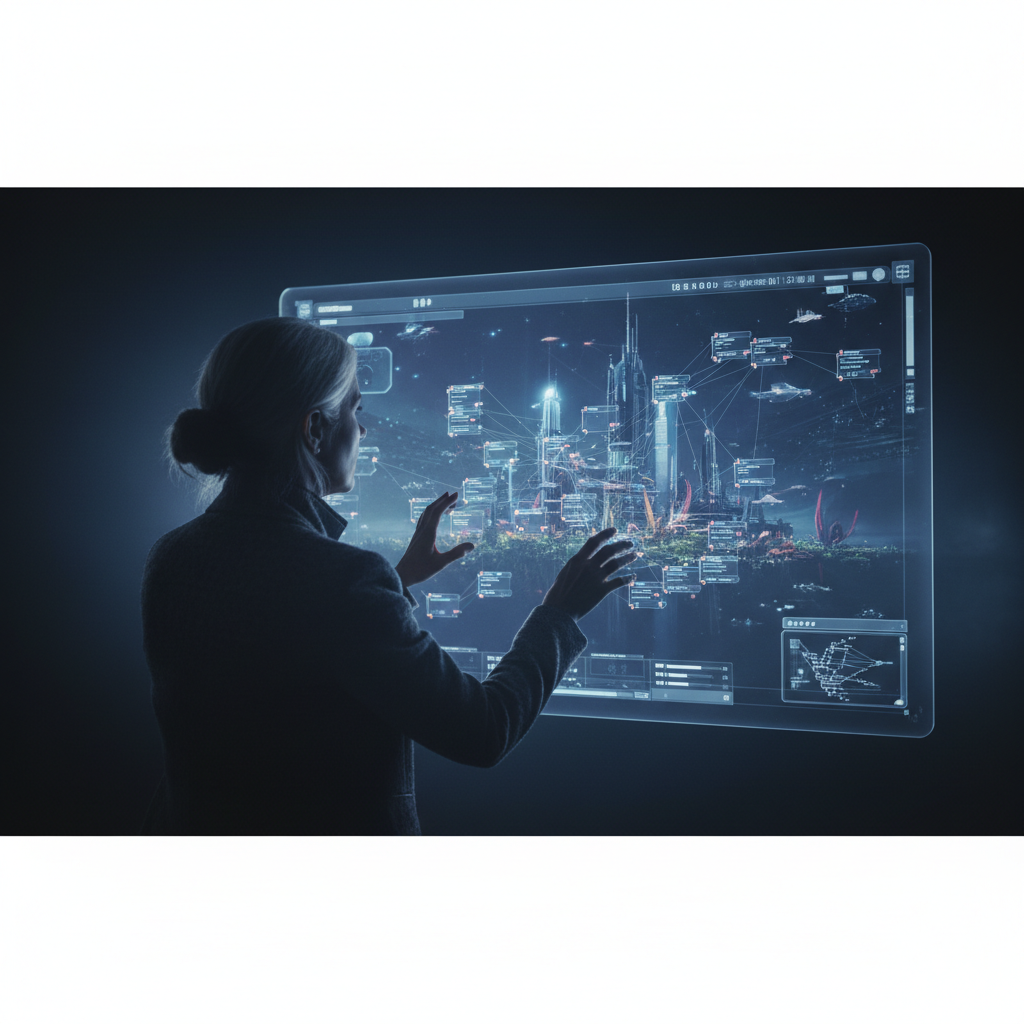
A New Era for Cinema
The tech world woke up to a seismic shift this morning as OpenAI, the research lab behind ChatGPT and Sora, announced its latest and most ambitious creation: 'Director AI'. In a detailed blog post published May 21, 2026, the company revealed a generative model capable of creating up to 120 minutes of high-fidelity, 4K video from complex text prompts, scripts, and storyboards. The announcement was accompanied by a series of jaw-dropping demo reels, showcasing everything from sweeping historical epics to intricate sci-fi worlds, all reportedly generated from text alone.
This is not an incremental update. While its predecessor, Sora, amazed the world two years ago with its minute-long video clips, Director AI represents a quantum leap in generative media. It maintains near-perfect character consistency, logical physics, and narrative coherence across a feature-film runtime. CEO Sam Altman described the release as "the moment the barrier between imagination and cinematic reality dissolves."
From Sora to Cinema: The Technology Explained
Director AI is more than just a scaled-up version of what came before. According to Mira Murati, OpenAI's CTO, the model is built on a new 'World State' architecture. Unlike previous models that predicted the next frame, Director AI simulates a persistent digital environment, including characters with consistent motivations and objects with stable properties. This allows for unprecedented long-term coherence.
The system's capabilities are staggering:
- Length and Resolution: Generates video up to 120 minutes in length at standard cinematic frame rates and up to 4K resolution.
- Multimodal Input: Users can upload a full screenplay, and the AI will interpret scene headings, character actions, and dialogue to generate corresponding visuals. It also accepts visual inputs, such as character sketches or storyboard panels, to guide the art direction.
- Interactive Control: The platform allows for iterative refinement. A creator can ask for changes like "make the lighting more dramatic in this scene" or "change the protagonist's costume to a blue jacket for the next 20 minutes."
- Audio Generation: The model also generates a complete audio landscape, including synchronized dialogue using cloned voices (with consent), sound effects, and an original musical score in a specified style.
"We've moved beyond simple video generation to holistic world simulation," Murati stated in the announcement. "Director AI understands narrative structure, emotional arcs, and the language of cinema. It's not just making moving pictures; it's telling stories."
Hollywood on Notice: Tremors in the Dream Factory
The reaction from the entertainment industry has been swift and deeply divided. While some hail it as the ultimate tool for creative expression, others see an existential threat. The value of billion-dollar studios is being questioned when a single creator might soon be able to produce a blockbuster from their laptop.
"This is both the most exciting and terrifying day in the history of film," said one prominent Hollywood producer who wished to remain anonymous. "The creative possibilities are endless, but the economic displacement could be catastrophic."
Guilds like the DGA (Directors Guild of America) and SAG-AFTRA (Screen Actors Guild) have issued statements expressing "profound concern." Recalling the hard-fought AI protections won during the 2023 strikes, they are calling for urgent regulatory frameworks to govern the use of such powerful tools. The fear is that roles from VFX artists and cinematographers to editors and even actors could be drastically reduced or eliminated. One analyst from Forrester predicts that over 30% of pre-production and post-production jobs in Hollywood could be automated within the next five years.
The Creator Economy's New Frontier
For independent creators, however, Director AI looks less like a threat and more like a revolution. The prohibitively high cost of filmmaking has long been a barrier for aspiring storytellers. This technology promises to level the playing field, enabling ambitious projects on a shoestring budget.
OpenAI also announced a partnership with celebrated indie filmmaker Lena Vostok, winner of the 2025 Sundance Grand Jury Prize. Vostok has been granted early access to the tool and is reportedly producing the first feature film generated entirely with Director AI, a project titled 'Echoes in the Static'.
"For years, I've had stories in my head that were too visually ambitious to ever get funded," Vostok commented. "With Director AI, the only limit is my imagination. This isn't replacing the director; it's giving the director a new, infinitely powerful camera."
OpenAI is rolling out access slowly, starting with a limited beta for a few hundred approved artists and studios. A wider public release is tentatively slated for early 2027, likely with a tiered pricing model.
The Unresolved Questions: Ethics and Information
With great power comes great responsibility, and Director AI's potential for misuse is not lost on its creators. The ability to generate photorealistic videos of any scenario imaginable opens a Pandora's box of ethical dilemmas, from hyper-realistic deepfake misinformation to copyright infringement on an unprecedented scale.
OpenAI insists it has built in robust safety measures. All video generated by the system will be indelibly watermarked using the C2PA standard, providing a clear 'Made with AI' provenance. The model is also trained to refuse prompts that request harmful content, public figures, or copyrighted IP. However, critics argue these safeguards can be circumvented and that the release is premature.
As Director AI steps into the spotlight, it forces a profound re-evaluation of what constitutes art, authorship, and reality itself. Today marks the beginning of a new chapter not just for Hollywood, but for human creativity. The film industry as we know it may never be the same.
Frequently asked questions
What is OpenAI's Director AI?+
Director AI is a new generative artificial intelligence model from OpenAI. It can create up to two hours of coherent, 4K video from text-based inputs like scripts and prompts. It also generates corresponding audio, including dialogue, sound effects, and music, effectively enabling the creation of feature-length films from text.
How is Director AI different from Sora?+
While Sora could generate silent video clips up to a minute long, Director AI is a massive leap forward. It supports feature-length runtimes (up to 120 minutes), maintains character and world consistency, and integrates multimodal inputs like full scripts. It also generates a complete, synchronized audio track, making it a holistic filmmaking tool.
What are the main concerns about this technology?+
The primary concerns revolve around mass job displacement in the creative industries, particularly for roles like VFX artists, editors, and potentially actors. There are also significant ethical worries about the potential for creating highly realistic deepfake misinformation, as well as complex questions about copyright and intellectual property in AI-generated art.
Who can use Director AI right now?+
Access to Director AI is currently very limited. OpenAI has launched a private beta program for a select group of several hundred approved artists, filmmakers, and studio partners. A broader public release has been tentatively scheduled for early 2027, though no specific date or pricing has been confirmed.
Liked this story?
Share it with a colleague, or explore more in the Artificial Intelligence section.
More stories
AWS Debuts Graviton5 Pro: A 'Processing-in-Memory' Chip to Break Nvidia's Stranglehold
Amazon Web Services just revealed Project Cerebrum: a new "processing-in-memory" chip called Graviton5 Pro. This radical design, available in new P1 instances, directly targets the memory bottlenecks that plague large AI models—and Nvidia's market dominance.
The Empire Strikes Back: DOJ Sues Coherence AI in Landmark Antitrust Case
The Justice Department just fired the opening salvo in what could be the defining antitrust battle of the decade, suing AI juggernaut Coherence AI. At stake: the very architecture of the AI economy and who gets to build its future.
Cerebrum’s New ‘LPU’ Chip Aims to End NVIDIA’s AI Inference Stranglehold
After years in stealth, Cerebrum Systems just launched the Synapse-1, a specialized "Language Processing Unit." The chip promises to slash the cost of running large language models, posing the most credible threat yet to NVIDIA’s data center empire.