Apple's $1599 Vision Air Is a Bold, Risky Gambit for AR's Mainstream Soul
Launching at a surprisingly accessible $1,599, Apple's new Vision Air headset sheds weight, cost, and some pro features in a daring attempt to transform spatial computing from a niche enthusiasm into a daily reality for millions.
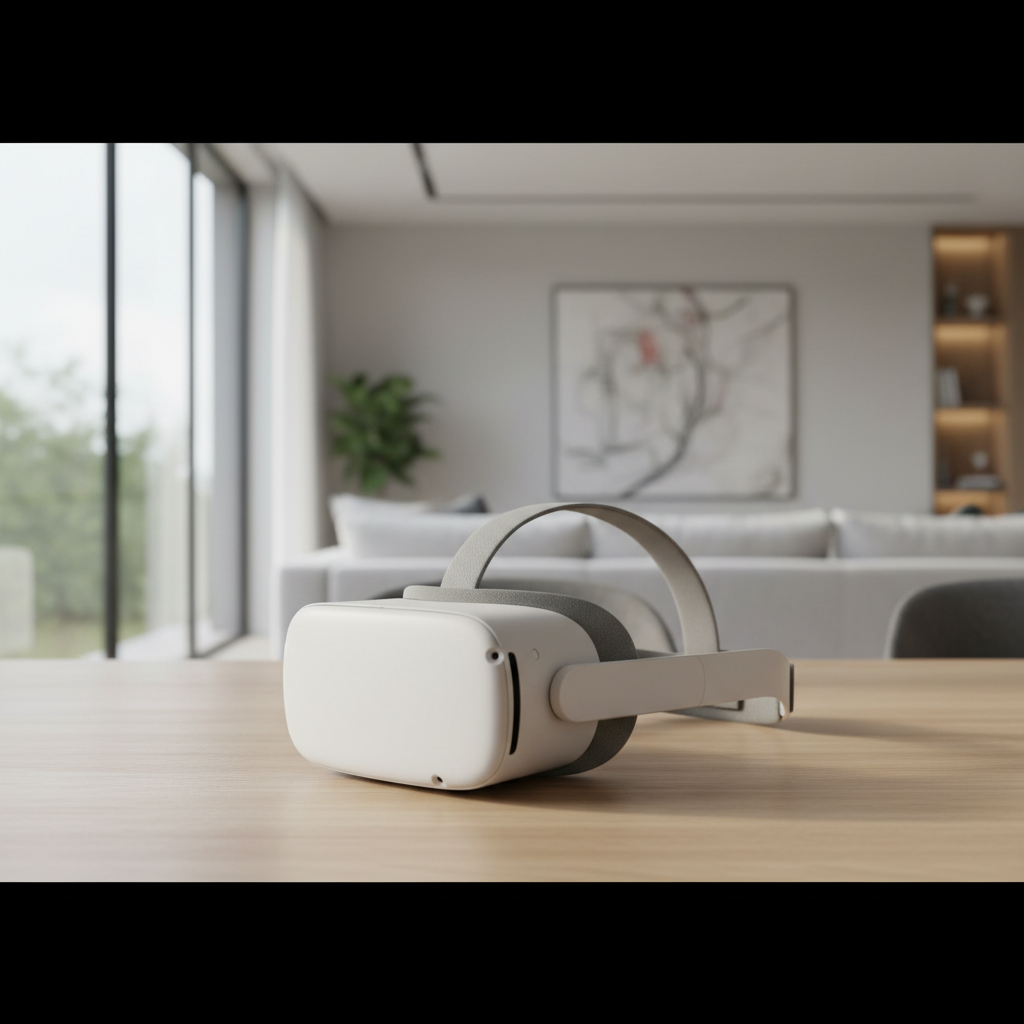
What Just Happened: The 'Air' Apparent
"We believe spatial computing is a profound technology, and we want to bring it to as many people as possible," Tim Cook declared on stage at WWDC 2026. The words echoed the same ambition Apple has voiced for years, but this time, they were backed by a product designed not just to define the future, but to sell it. The Apple Vision Air is official, and it's launching this fall for $1,599.
For the past two years, the $3,499+ Vision Pro has been a device for pioneers, developers, and the deeply resourced—a stunning but heavy and isolating glimpse of what's next. The Vision Air, as its name implies, is designed to be lighter in every sense. It's lighter on the head, lighter on the wallet, and carries a lighter set of expectations. It aims to be the MacBook Air to the Vision Pro's MacBook Pro: the version for everyone else.
The core specifications are impressive for the price point. The Vision Air is powered by a new dual-chip architecture: the R2 chip, a successor to the R1 that exclusively handles sensor input, and a new A20 Bionic processor delivering the main compute. It will ship in the fourth quarter of 2026, just in time for the holiday season.
The Anatomy of Compromise: Building for the Masses
Getting a Vision-family product down to $1,599 required a series of thoughtful, and in some cases painful, engineering decisions. The primary goal was reducing weight and cost, and Apple's choices reveal its priorities. The chassis is no longer meticulously sculpted aluminum and laminated glass; instead, it uses a high-grade magnesium alloy and more fabric in its construction. The result is a device that's a claimed 30% lighter than the Vision Pro.
The custom-machined single-strap headband is gone, replaced by a dual-strap system more reminiscent of high-end ski goggles, included as standard. The Zeiss optical inserts will still be available for prescription wearers, but the core display system sees the most significant change. While Apple still calls the micro-OLED panels "4K per eye," technical documentation reveals a slightly lower pixels-per-degree than the Pro model. It's a subtle downgrade most new users won't notice, but one that drastically reduces the cost of the single most expensive component.
The most debated omission will be EyeSight, the outward-facing display that projects a representation of the user's eyes. On the Vision Air, this is replaced by a simple, opaque white faceplate. "It was a necessary trade-off for weight, battery, and cost," said Anika Sharma, a principal analyst at Gartner. "EyeSight was a novel social feature, but Apple's data likely showed it wasn't critical for the core user experience. Getting the on-face weight and the price down was the primary mission, and they were ruthless in achieving it."
Vision Air isn't a lesser Vision Pro; it's a different statement. It asks not 'What can a computer do?' but 'Where can our computers go?'
The device still uses a tethered, pocketable battery pack, though the new version is smaller and lighter. Apple resisted the temptation to offload computing to a tethered iPhone, a long-rumored cost-saving measure. The Vision Air remains a self-contained spatial computer, a decision that preserves the integrity of the experience at the expense of a lower potential price.
visionOS 3: The Software Soul of the New Machine
A more accessible device demands more accessible software. Unveiled alongside the Vision Air, visionOS 3 is an evolution focused on shared experiences and intuitive interaction. The headline feature is "Spatial Personas," an advancement over the original's static representations. These are now fully-rendered, AI-driven avatars that can move around a shared space, mirroring the user's upper body movements and gestures for a more believable sense of presence in collaborative apps like Freeform or when watching a movie together in the Cinema Environment.
Other key updates in visionOS 3 include:
- Shared Spaces: Users can now more easily create persistent, shared spatial environments. A friend can join you in your virtual space to look at photos or browse the web on a giant virtual screen, with their Spatial Persona appearing right beside you.
- Improved Hand Tracking: The system is now better at interpreting fast or overlapping hand gestures, a common frustration in earlier versions. It also introduces a new 'glance and pinch' gesture for quick selection of UI elements from a distance.
- Air-Optimized Apps: The App Store will feature a new category for apps specifically tailored for the Vision Air. This signals to developers that a larger, more casual audience is coming, encouraging the creation of more games, social apps, and media experiences.
- Windowing and Multitasking: The window management system has been overhauled to be simpler for new users, with more 'snap-to-grid' functionality and one-tap arrangements for common layouts like 'work focus' or 'entertainment'.
The $1599 Question: Apple vs. Meta's Metaverse
With the Vision Air, Apple is no longer just competing with an idea of the future; it's competing directly with Mark Zuckerberg. At $1599, the Vision Air is still a super-premium product, but it's now in the same conversation as a high-end laptop or smartphone—and it puts real pressure on Meta's forthcoming Quest 4.
The philosophical divide is starker than ever. Meta has spent billions building a gaming-first, socially-driven metaverse, betting on volume and an open (though still controlled) platform. Apple is taking its classic approach: a vertically integrated, polished hardware and software experience that extends its existing ecosystem. An iMessage notification appearing seamlessly in your physical space, or a FaceTime call with a Spatial Persona, is something only Apple can deliver. The Vision Air is a Trojan Horse for Apple's services in the 3D world.
This price point forces a decision for consumers and developers alike. Do you invest in the ecosystem you already know, one promising seamless integration with your phone, watch, and laptop? Or do you opt for the platform with the larger gaming library and a lower, albeit still unannounced, price tag?
For Developers and Consumers, A New Reality Dawns
The Vision Pro's greatest success was galvanizing a developer community. The Vision Air's mission is to give those developers an audience. Major players who have been experimenting on the Pro—Adobe with its creative suite, Microsoft with Office, and Disney+ with its immersive content—now have a path to a significant return on investment. The existence of a more affordable model justifies building the "killer app" that spatial computing has so far lacked.
For consumers who balked at the $3,500 barrier to entry, the world looks different today. The Vision Air is still an expensive, discretionary purchase. But it's no longer an experimental one. It's a product with a clear value proposition: the best personal movie theater, a private, focused workstation, and a new way to connect with family and friends. It's designed for the living room, not just the developer's lab.
The announcement rocks the boat, but it doesn't guarantee a safe landing. Apple has just fired the starting gun on the next phase of personal computing. The original Vision Pro proved that a truly magical AR experience was possible. The Vision Air is Apple's audacious bet that it can make that magic matter to millions. The next 18 months will reveal whether they've launched the next iPhone, or a beautifully engineered, very expensive iPod Hi-Fi.
Frequently asked questions
Is the Vision Air a replacement for the Vision Pro?+
No. Apple is positioning the Vision Air and Vision Pro as two distinct product lines, similar to the MacBook Air and MacBook Pro. The Vision Pro will remain the top-tier device for professionals and developers who need the absolute best performance and features, like the EyeSight display. The Vision Air is aimed at making spatial computing accessible to a broader consumer audience.
Can I use my existing Vision Pro apps on Vision Air?+
Yes, Apple has confirmed that all existing visionOS applications will run natively on the Apple Vision Air. The shared visionOS 3 platform ensures compatibility. However, Apple is also encouraging developers to create 'Air-optimized' experiences that might be more focused on casual use cases, gaming, or media consumption, tailored to the new device's target audience.
What's the biggest feature missing from Vision Air compared to the Pro?+
The most noticeable omission is the 'EyeSight' feature, the external display that shows a rendering of the user's eyes to people nearby. To reduce weight, cost, and complexity, the Vision Air has an opaque front plate instead. It also features slightly lower-resolution displays, though still 4K per eye, and uses lighter, less-premium materials like a magnesium alloy instead of aluminum.
How does the Vision Air battery life compare to the original?+
Apple is claiming a similar battery performance to the Vision Pro, which is about two hours of general use on a single charge of its external battery pack. The company emphasized that the included battery for Vision Air is a new, lighter and more compact design. For extended sessions, the device can, like its Pro counterpart, be plugged into a power source for all-day use.
Should I buy a Vision Air or wait for the Meta Quest 4?+
This depends heavily on your priorities and current tech ecosystem. The Vision Air promises deep integration with Apple's ecosystem for productivity, communication, and entertainment at a premium price. The upcoming Meta Quest 4 is expected to be more focused on gaming and social VR at a significantly lower price point, offering a larger game library but lacking Apple's seamless device and service integration.
Liked this story?
Share it with a colleague, or explore more in the Gadgets section.
More stories

Apple View Is Here: A Masterclass in Compromise for the Post-iPhone Era
After years of anticipation, Apple View is no longer a rumor. Cupertino's $2,499 bet on augmented reality is technologically stunning but riddled with calculated compromises. Is this the device that finally takes AR mainstream, or another beautiful, expensive niche?
The Best Foldable Phones of 2026: A Buyer's Guide
Hinges no longer creak, creases are fading, and prices are finally dropping. Here are the foldables actually worth buying this year.