Apple View Is Here: A Masterclass in Compromise for the Post-iPhone Era
After years of anticipation, Apple View is no longer a rumor. Cupertino's $2,499 bet on augmented reality is technologically stunning but riddled with calculated compromises. Is this the device that finally takes AR mainstream, or another beautiful, expensive niche?

The $2,499 Question: What Is Apple View?
Priced at an assertive $2,499 and available July 10th, Apple View is what the company bills as the world's first 'wearable augmented life computer.' In physical form, it’s a stunning piece of industrial design that looks like a pair of high-end acetate glasses, a far cry from the bulky ski-goggle aesthetic of its progenitor, the 2024 Vision Pro. Available in three colors—Midnight, Starlight, and a product(RED) edition—the frame houses a dizzying array of technology. The core experience is driven by dual 4K micro-OLED displays, one for each eye, projected through custom catadioptric lenses developed with Zeiss. The result is a crisp, vibrant overlay of information onto the real world with a 120Hz refresh rate that feels utterly seamless.
Inside, the device runs on a dual-chip architecture. The familiar A19 Bionic, borrowed from the latest iPhone, handles the main computational load, while a brand-new, second-generation spatial coprocessor, the R3, is dedicated solely to processing input from the 14 cameras and sensors peppered throughout the frame. This division of labor is key to achieving the low-latency tracking that makes the experience believable. Control is a refined version of the Vision Pro's paradigm: eye-tracking selects, and subtle finger taps or voice commands via a new multi-microphone array confirm actions. It’s intuitive, fast, and feels like magic.
GazeOS: A Lighter Touch for an Augmented World
Perhaps the biggest evolution from Vision Pro is the software. Apple View runs on GazeOS, a philosophically different operating system from the immersive, window-based visionOS. Where visionOS was about bringing computing into your space, GazeOS is about bringing contextual computing into your life. It's designed for glanceable information, not deep immersion.
By default, the view is completely clear. Notifications appear as subtle, glowing 'sparks' in your peripheral vision, which you can glance at to expand. Walking down the street, Maps can overlay a gentle, pulsing line on the sidewalk. Looking at a restaurant can pull up its menu and reservation status. At the WWDC 2026 keynote, Apple VP of Human Interface Design Alan Dye explained the thinking: "We didn't want to distract you from reality; we wanted to enhance it. GazeOS is about giving you digital superpowers that feel completely natural. The user interface is the world around you." This philosophy permeates the system, which prioritizes ephemeral, context-aware information over the persistent, heavy windows of its predecessor.
The goal was never to put a screen on your face. It was to remove all the other screens from your life.
The R3 Chip and the Unavoidable Laws of Physics
The performance of Apple View is, in a word, flawless. The R3 chip processes a staggering amount of real-time sensor data, mapping the environment and tracking your gaze with imperceptible latency. This is the 'secret sauce' that separates Apple View from competitors like Meta’s Quest Pro 4. There is no judder, no world-sway, no unsettling drift. It just works.
But this performance comes at a cost, one dictated by the immutable laws of thermodynamics and battery chemistry. Cramming this much power into a conventional glasses form factor generates heat and consumes electrons at a ferocious rate. The result is Apple View's most significant compromise: a 90-minute untethered battery life. To mitigate this, Apple has engineered a clever, if inelegant, solution: the 'Power Band.' This is a slim, fabric-covered magnetic band that can be worn around the collar of a shirt or the back of the neck, connecting to the glasses via a thin, woven magnetic cable. Additional Power Bands can be purchased for $199 and swapped throughout the day. While a smart piece of engineering, it's a clear admission that all-day battery life in this form factor remains science fiction.
A “Cambrian Explosion” of Apps? Not Yet.
A new platform lives or dies by its software. At launch, the most polished experiences come from Apple itself. FaceTime's 'Portraits,' which render photorealistic avatars of the people you're speaking to, feel like a genuine glimpse of the future of communication. Live translation overlays text onto the world as people speak in foreign languages. Apple Fitness+ offers guided runs with holographic pacers.
Third-party support is promising but nascent. IKEA has an app that lets you furnish your room with true-to-scale models. Adobe's Behance allows you to place virtual art galleries on your walls. Niantic, of Pokémon GO fame, has a launch title called 'Fragments' that turns your neighborhood into a magical scavenger hunt. During the keynote, CEO Tim Cook declared, "We're providing the canvas; the world's most creative developers will paint the masterpieces." This is the classic Apple playbook, but the $2,499 entry fee may give many smaller developers pause, risking a slow start to the app ecosystem's 'Cambrian explosion.'
Cupertino's View vs. Meta's Reality
It's impossible not to compare Apple View to Meta's offerings. The recently launched Quest Pro 4, at $1,299, is half the price and boasts a significantly larger and more mature gaming library. Meta’s strategy is rooted in VR, with AR as a feature. They are building a metaverse, a destination. Apple, conversely, is building an augmentation of the real world. They don't want you to live in the glasses; they want you to live your life, but better, with the glasses.
This philosophical divide defines the two products. The Quest is for play and escapism. The View is for communication and utility. Meta is winning the battle for hours spent in-headset, particularly with gamers. Apple is playing a longer, more ambitious game: to become the essential device for passive, all-day interaction, making the smartphone feel like a relic from a bygone era.
Apple View isn't an iPhone killer. Not in 2026. It’s too expensive, the battery life is a genuine constraint, and the app ecosystem is a fertilized field waiting for seeds. But it is the first product that feels like a credible first draft of the iPhone's successor. It’s a beautifully designed, technologically marvelous, and deeply compromised glimpse into the next two decades of personal computing, and for the first time, the post-smartphone era doesn't feel like a fantasy.
Frequently asked questions
How is Apple View different from the 2024 Apple Vision Pro?+
Apple View is a much lighter, glasses-style device designed for all-day augmented reality, not immersive virtual reality. It runs GazeOS for glanceable info, whereas Vision Pro used visionOS for spatial computing with virtual windows. Think of View as an iPhone for your face, and Vision Pro as a Mac for your face. The former is for augmenting life, the latter for dedicated tasks and immersion.
Can I use my prescription lenses with Apple View?+
Yes. Apple has continued its partnership with Zeiss to provide custom prescription optical inserts. During the online ordering process, you can upload your prescription, and custom magnetic inserts will be created for you. These snap into the inside of the Apple View frame, ensuring the experience is sharp and clear without needing to wear glasses underneath the device.
What are the biggest limitations or downsides of Apple View right now?+
There are three primary compromises. First, the price of $2,499 makes it a luxury item. Second, the built-in battery life is only 90 minutes, requiring the use of an external, swappable 'Power Band' for extended use. Finally, the third-party app ecosystem is still in its infancy, meaning there isn't a true 'killer app' beyond Apple's impressive but limited first-party offerings.
Is this a good device for gaming?+
While it is technologically capable of running high-fidelity games, gaming is not its primary focus. The launch library is small and geared toward casual AR experiences rather than deep, immersive VR titles found on platforms like the Meta Quest. Power users and hardcore gamers will likely find the Meta ecosystem more robust and cost-effective for dedicated play sessions.
What is the 'killer app' for Apple View at launch?+
There isn't a single, universally acclaimed 'killer app' from a third party yet, which is a significant risk for the platform. For now, the most compelling applications are Apple's own native services. Features like hyper-contextual live navigation in Maps, real-time language translation overlays, and the futuristic 'Portraits' in FaceTime are the biggest draws, showcasing the device's potential.
Liked this story?
Share it with a colleague, or explore more in the Gadgets section.
More stories
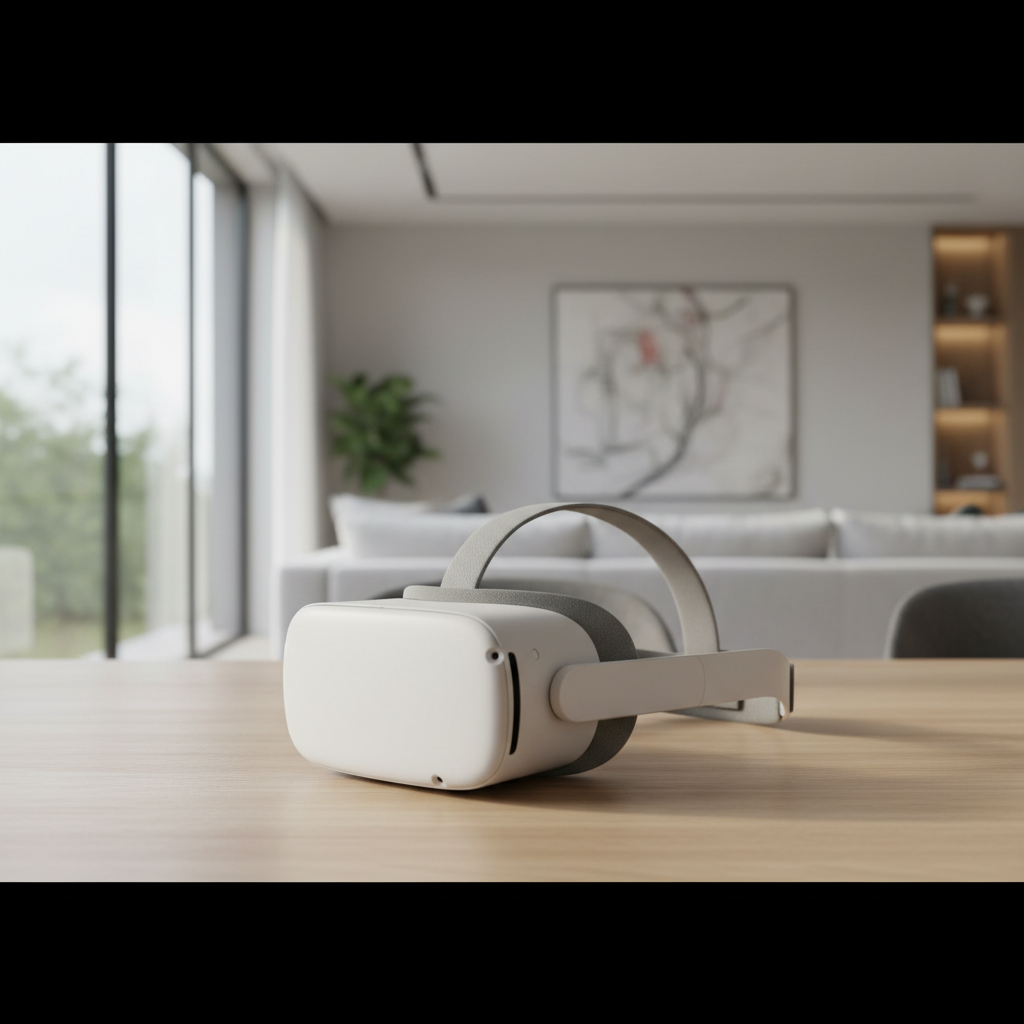
Apple's $1599 Vision Air Is a Bold, Risky Gambit for AR's Mainstream Soul
Launching at a surprisingly accessible $1,599, Apple's new Vision Air headset sheds weight, cost, and some pro features in a daring attempt to transform spatial computing from a niche enthusiasm into a daily reality for millions.
The Best Foldable Phones of 2026: A Buyer's Guide
Hinges no longer creak, creases are fading, and prices are finally dropping. Here are the foldables actually worth buying this year.